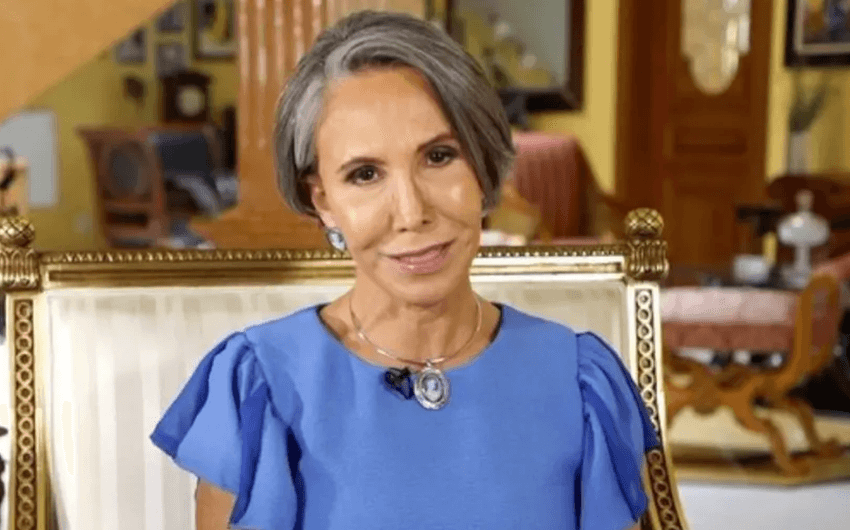
Florinda Meza: The Woman Behind Doña Florinda, Fame, Love, and Lasting Debate
Florinda Meza is one of those names that instantly pulls you into a specific world: a courtyard, a barrel, childhood chaos, and a sharp voice that could flip from scolding to soft in a single breath. For many people, she will always be Doña Florinda from El Chavo del Ocho—a character so iconic it nearly swallowed the person playing her. But Florinda Meza’s real story is bigger than one role. She has been an actress, comedian, screenwriter, and television producer, and she’s also been a central figure in one of Latin America’s most famous entertainment partnerships: her decades-long relationship with Roberto Gómez Bolaños, known to millions as “Chespirito.”
Who Florinda Meza Is Beyond the Role Everyone Remembers
Florinda Meza García was born in Mexico and built her career inside a television industry that moved fast and demanded versatility. She didn’t only play one “type.” She could do broad comedy when it was needed, but she also delivered character work with crisp timing—the kind that looks easy until you try to do it yourself. Her expressions could land like punctuation. Her pauses did as much work as her lines.
People recognize her most for Doña Florinda (and also La Popis) in El Chavo del Ocho, plus additional characters across the wider Chespirito comedy universe. But even inside that world, she wasn’t simply “the actress who shows up.” Over time, she became involved behind the scenes too, expanding into writing and producing in Mexican television.
The Doña Florinda Effect: When a Character Becomes a Cultural Shortcut
Doña Florinda is remembered as strict, status-conscious, and fiercely protective—sometimes hilariously so. She’s the mother always ready to defend her son, sometimes with a slap and sometimes with a speech, and she carries herself like she’s above the neighborhood even when the neighborhood keeps proving otherwise. The comedy is built on contrast: pride versus reality, manners versus mayhem, and a woman trying to control a world that refuses to behave.
That character became a cultural shortcut. People reference “Doña Florinda” to describe a certain type of parent, a certain kind of social pretension, a certain style of dramatic outrage. When a character becomes that recognizable, the actor can get trapped inside it. Everything you do afterward gets compared to the role everyone already owns in their memory.
For Meza, that created a complicated legacy: loved for a performance that shaped childhoods across generations, but also criticized when the public began blending the character’s sharp edges with assumptions about her real personality. That’s one of the strange costs of iconic comedy. Audiences laugh, but they also label.
Chespirito’s World and Meza’s Place Inside It
Meza’s rise is inseparable from the broader Chespirito phenomenon. Roberto Gómez Bolaños created and starred in a comedy universe that became massive across Latin America and far beyond. Within that orbit, Meza wasn’t a random addition. She became one of the faces people expected to see, one of the rhythms people expected to hear, one of the character types that helped the world feel complete.
It’s easy to forget how demanding that kind of television work can be. Comedy at that scale isn’t just “be funny.” It’s hit marks, repeat takes, keep timing consistent, maintain character energy across long production runs, and do it all while the show is becoming a cultural institution in real time. Meza was part of that machine, and she helped define how it looked and sounded.
The Relationship That Became Part of the Public Myth
Florinda Meza’s personal life became a major public conversation largely because of her relationship with Roberto Gómez Bolaños. Their partnership began during the Chespirito years and eventually lasted decades. Years later, they married in a civil ceremony in 2004.
To fans, the relationship often lands in two competing emotional registers.
- The romantic register: two creative people bonded through work, humor, and shared life, staying together long-term.
- The controversial register: a relationship that started under complicated circumstances and remained a lightning rod for rumors, blame, and moral arguments.
The reason it never stays simple is because people don’t treat celebrity relationships as private events. They treat them as moral puzzles they’re allowed to solve. With Meza and Gómez Bolaños, the public conversation grew bigger than the couple, turning into debates about loyalty, beginnings, endings, and who “deserved” what.
Why Florinda Meza Draws Such Strong Opinions
Meza has been praised and criticized with an intensity that goes beyond normal fandom. Part of that is character baggage—Doña Florinda was written to be sharp and judgmental, so audiences already had a template for how they wanted to feel about her. Part of it is the way people treat women near powerful men in entertainment: they either become saints who saved him or villains who manipulated him. Real humans rarely fit either costume.
Another factor is that Chespirito’s legacy belongs to millions of people emotionally. When a creator becomes “childhood,” fans can get possessive. They don’t only want the work to remain pure; they want the story around the work to remain pure too. Anyone who complicates that story becomes a convenient place to put disappointment.
And then there’s the reality that long-running casts often carry long-running tensions. Even without gossip, it’s normal for people who worked together for years to hold grudges, competing memories, and different versions of history. Fans inherit those conflicts, pick sides, and keep the arguments alive long after production ends.
Her Work Beyond Acting: Producer and Writer
Although audiences know Meza mainly through performance, she has also been credited as a television producer and screenwriter. That matters because it reframes her as someone who didn’t only appear in a successful franchise—she also participated in shaping content, structure, and storytelling from behind the camera.
This is often where public understanding lags. Many viewers assume actors are simply assigned roles and read lines. In reality, long-term television ecosystems—especially ones that last for years—often create power centers behind the scenes. People who are close to production become involved in creative decisions, tone, casting, and direction. Meza’s later work in producing underscores that she wasn’t just a face; she was part of the engine.
Why She Still Matters Today
Florinda Meza remains relevant for reasons that go beyond nostalgia.
First, El Chavo del Ocho isn’t simply “an old show.” It’s a shared language across countries, generations, and households. People still quote it, meme it, imitate it, and pass it down. If a show stays alive like that, the actors stay alive in the culture too.
Second, Meza’s image is one of the most recognizable in Latin American television history. That kind of recognition doesn’t fade quietly. It mutates into parodies, debates, short clips, and constant rediscovery.
Third, her relationship with Gómez Bolaños continues to be discussed because people remain fascinated by the private lives behind public comfort. Comedy is intimate. It enters homes. Fans feel like they “know” the cast. When the behind-the-scenes story doesn’t match the warmth of the on-screen world, curiosity spikes.
How to Understand Her Legacy Without Turning It Into a Trial
If you want a fair way to hold Florinda Meza’s legacy, it helps to separate three things that often get mashed together:
- The character: Doña Florinda is written to provoke. She’s comedic friction.
- The professional: Meza contributed to a landmark television universe as an actress and later as a creator behind the scenes.
- The private person: the public will never fully know the complete truth of every relationship dynamic, every backstage conflict, or every emotional decision.
You can love the work without pretending every adult involved behaved perfectly. You can also acknowledge controversy without reducing a real person into a cartoon villain. The truth is usually less dramatic than the internet wants and more human than any “team” will admit.
The Bottom Line
Florinda Meza is a Mexican actress and creator whose most famous role—Doña Florinda—became a permanent cultural reference point. Her career is tied to the Chespirito legacy, her personal story is tied to her decades-long partnership with Roberto Gómez Bolaños, and her public reputation remains a mix of affection, criticism, and fascination. Whether people talk about her with love or controversy, the reason she stays talked about is simple: she helped build a piece of television history that never really left.
image source: https://quinto-poder.mx/tendencias/2025/06/20/florinda-meza-no-se-siente-culpable-por-su-romance-con-chespirito-54404.html