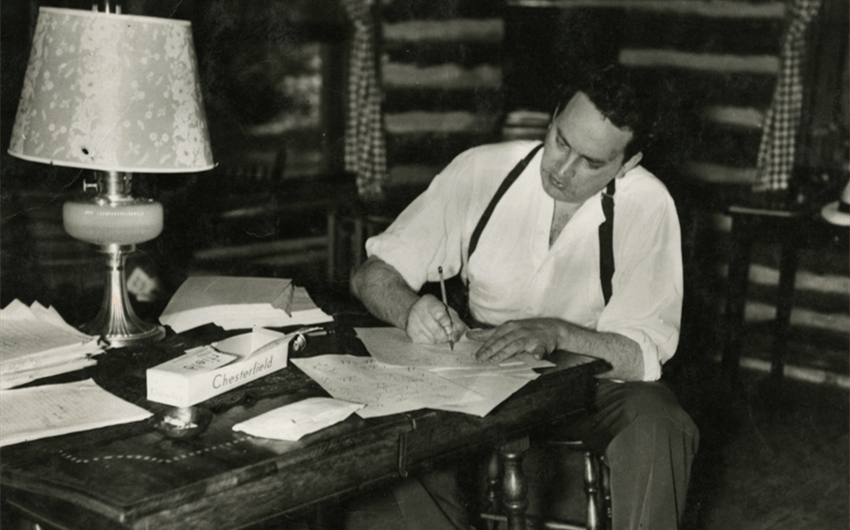
Thomas Wolfe Wife Question: Why the Author Never Married and Loved Deeply
If you’re searching “thomas wolfe wife,” you’re running into one of the most common mix-ups in American literary history. Thomas Wolfe—the novelist behind Look Homeward, Angel—never married, which means he never had a wife, even though he had intense relationships and wrote about love with real heat. The confusion usually comes from other writers with similar names and from modern websites that oversimplify his personal life. Let’s clear it up the right way.
First, which Thomas Wolfe are we talking about?
Before answering the wife question, it helps to lock in the identity. This article is about Thomas Clayton Wolfe (1900–1938), the American novelist often linked to the Southern Renaissance and best known for autobiographical, sweeping novels filled with memory, longing, and place.
He is not the later journalist and novelist Tom Wolfe (1930–2018), who was married to Sheila Berger Wolfe. That “Tom Wolfe vs. Thomas Wolfe” overlap is a big reason search results feel messy. The Thomas Wolfe Society even addresses this directly, noting Thomas Wolfe is not connected to the modern writer Tom Wolfe.
Did Thomas Wolfe ever have a wife?
No. Thomas Wolfe never married. The Thomas Wolfe Society answers the question plainly: “Did Thomas Wolfe ever get married?” and the answer is simply “No.” They add that he talked about it at times, but it didn’t happen.
That may feel surprising because Wolfe wrote about love, desire, home, and human connection with such force that readers assume there must have been a traditional domestic life somewhere behind the pages. But Wolfe’s real biography doesn’t follow a “settle down and build a household” pattern. It’s more like a storm: brilliant work, constant motion, intense attachments, and a life cut short at 37.
So why do people still search for “Thomas Wolfe wife”?
There are a few reasons this question keeps coming back, even though the factual answer is clear.
- The name confusion problem: Tom Wolfe had a wife, and people accidentally merge the two authors.
- The “famous author” assumption: many readers assume every major writer of that era had a spouse in the background.
- Online biography shortcuts: some websites try to “complete” his personal life with a neat label because it makes a quick, clickable headline.
- His most famous relationship was very dramatic: Wolfe’s love life wasn’t quiet, and that intensity makes people assume it ended in marriage.
In other words, the internet keeps asking because the story feels like it should include a wife—even though it doesn’t.
The relationship that shaped the rumor: Aline Bernstein
If Thomas Wolfe didn’t have a wife, who was the most important romantic partner in his life? Most biographies point to Aline Bernstein, a theatrical designer who became Wolfe’s lover, supporter, and muse during the late 1920s.
According to major reference summaries, Wolfe met Bernstein in 1925 on his return voyage from Europe. She was significantly older than he was and was already married with children. They became lovers in 1925 and remained involved for about five years. Britannica describes Wolfe’s relationship with Bernstein and her influence, and other archives and biographical references trace their relationship in the same general period.
This relationship matters to the “wife” question because it had many of the emotional features people associate with marriage—support, closeness, devotion, conflict, and long conversations about life and work. But it was not a marriage, and Bernstein did not leave her husband to become Wolfe’s spouse. Their bond lived in a complicated in-between space: real, intense, and deeply personal, yet outside the traditional structure people expect.
Why Aline Bernstein was so important to Wolfe
Wolfe was a writer with enormous ambition and a style so expansive that it could overwhelm editors and publishers. Early in his career, he needed more than praise. He needed practical support—emotional stability, encouragement, and sometimes financial help—while he turned his huge drafts into publishable books.
Bernstein provided that kind of support. Biographical accounts describe her as someone who encouraged Wolfe’s work and helped him keep going during the creation of his first novel. Many summaries also note that Wolfe drew on his relationship with Bernstein in his fiction, transforming her into the character Esther Jack in later works, and that Bernstein wrote about the relationship as well.
The relationship was not smooth. It’s often described as turbulent, even combative at times. But it was also formative. For many readers, Bernstein becomes the closest thing to a “wife figure” in Wolfe’s life—not in a literal sense, but in the sense of being the most significant long-term partner connected to his creative peak.
Why their relationship didn’t end in marriage
There’s a practical answer and a personal answer.
The practical answer is simple: Bernstein was married, and her marriage remained intact even through the affair. Biographical accounts of Bernstein describe her as married to Theodore Bernstein and having children, and that her relationship with Wolfe existed alongside that reality.
The personal answer is more complicated: Wolfe’s personality and lifestyle didn’t naturally lead toward domestic stability. He traveled, he worked obsessively, and he lived with a kind of emotional intensity that can make ordinary partnership hard. Even when he loved deeply, he tended to live like someone who was always halfway out the door—restless, hungry, moving toward the next page.
Wolfe’s life was built around motion, not settling down
One of the clearest ways to understand why he never married is to look at the shape of his adulthood. Thomas Wolfe left home, studied intensely, moved into New York, traveled repeatedly to Europe, and later traveled across America. His biography reads like someone who was always trying to see the world fast enough to match the speed of his own mind.
Britannica places Wolfe in New York City for most of his post-Harvard life and describes his major writing period unfolding through those years. Other historical biographies also emphasize his travel and movement across the U.S. and abroad. That kind of lifestyle can be thrilling, but it also makes traditional domestic life difficult. Marriage requires rhythms—shared routines, compromise, some degree of predictability. Wolfe’s life, by contrast, leaned toward the unpredictable and the consuming.
That doesn’t mean he was incapable of love. It means love didn’t take the form of marriage for him.
He did talk about marriage, but it never happened
This is an important nuance. It’s easy to turn “never married” into “never wanted marriage.” Wolfe’s story is not that clean. The Thomas Wolfe Society notes he talked about marriage at times. That suggests the idea wasn’t alien to him—it just didn’t become reality.
There are many possible reasons for that:
- Timing: Wolfe’s biggest years were also his most chaotic and work-heavy years.
- Intensity: his relationships could burn hot, which can make long-term stability hard.
- Identity: he often seemed to experience life as raw material for writing, which can complicate intimacy.
- Health and early death: he died young, before many people “settle” even if they plan to.
The key point is not to psychoanalyze him into a neat box. The key point is to respect the historical record: he never took a spouse, even though he loved and was loved.
What his novels reveal about his idea of love and home
Even though Wolfe didn’t have a wife, his writing is filled with yearning for connection. It’s one reason readers assume there must have been a marriage somewhere. In Wolfe’s books, love is often intertwined with bigger themes: nostalgia for childhood, the ache of leaving home, the dream of returning, and the realization that time changes everything.
His most famous novel, Look Homeward, Angel, is deeply tied to family and place. Britannica describes the novel as recounting the growth of an autobiographical protagonist in a fictionalized version of Wolfe’s hometown. That focus on “home” doesn’t necessarily mean “marriage,” but it does mean Wolfe’s emotional center was always tied to belonging.
In his work, the most consistent “partner” isn’t a spouse—it’s memory. That’s where he returns again and again, even as real life pulls him forward.
The other relationship people overlook: his bond with his mother and family story
When people search for a wife, they’re often searching for “the person who grounded him.” In Wolfe’s actual life, that grounding force was often family—especially the complicated family dynamics he wrote about relentlessly.
Britannica notes Wolfe grew up in his mother’s boardinghouse in Asheville, and many biographies emphasize how strongly his upbringing shaped his fiction. His family was central to his work, and his writing turned family life into something epic, painful, and unforgettable.
This matters because some writers build their adult stability through marriage. Wolfe built his emotional universe through family memory and through writing itself. The domestic “center” of his life wasn’t a spouse; it was an inner world he couldn’t stop revisiting.
Was Thomas Wolfe engaged, secretly married, or hiding a wife?
These rumors show up from time to time, mostly because the internet loves hidden stories. But the most credible sources do not present Wolfe as secretly married. In fact, reputable references treat the answer as straightforward: he never married.
If you see a website claiming he had a wife whose name is “hard to find,” it’s worth pausing and asking: where is that claim coming from? Is it supported by a recognized biographical authority, a historical archive, or a dedicated Wolfe organization? Or is it just a recycled paragraph from a low-quality biography page that doesn’t cite anything solid?
With Wolfe, the cleanest truth is usually the correct one: he had major relationships, but no wife.
How the Tom Wolfe mix-up fuels the “wife” myth
Let’s address the biggest practical source of confusion clearly: Tom Wolfe—the later writer known for New Journalism and books like The Bonfire of the Vanities—was married. Many widely used entertainment and biography databases list Tom Wolfe as married to Sheila Berger.
So if a reader types “Thomas Wolfe wife,” Google may serve results for Tom Wolfe, and the searcher walks away thinking, “Okay, his wife was Sheila.” That is true for Tom Wolfe, and false for Thomas Wolfe.
The Thomas Wolfe Society explicitly warns about this confusion by stating that Thomas Wolfe is not connected to the modern writer Tom Wolfe. That’s one of the strongest hints that this mix-up has been happening for a long time.
What to say if you want one clean sentence for your blog
If you need a simple line that won’t get you in trouble later, use something like:
“Thomas Wolfe never married and did not have a wife, though he had significant relationships, including with theatrical designer Aline Bernstein.”
It’s accurate, respectful, and it doesn’t try to turn a complicated life into gossip.
Why “never married” doesn’t mean “alone”
It’s tempting to treat Wolfe’s unmarried status like a sad ending, but that’s not quite right. Wolfe was surrounded by relationships: friends, editors, fellow writers, family, and lovers. His work life was intensely collaborative in some ways too—Britannica notes his close working relationship with editor Maxwell Perkins, who helped him shape enormous manuscripts into publishable novels.
Wolfe’s emotional life wasn’t empty. It was just not organized around a marriage certificate.
And for many artists, that difference matters. Some writers create best inside stable domestic life. Others create best while living in motion, in tension, in longing. Wolfe’s writing often feels powered by longing—by the feeling that something is always just out of reach. It’s possible that a settled life would have changed his work entirely.
Bottom line
Thomas Wolfe never had a wife because he never married. The most reliable sources treat this as a clear fact, even while acknowledging he had deep relationships and talked about marriage at times. His most significant romance is often linked to Aline Bernstein, but that relationship didn’t become a marriage and existed within complicated real-life circumstances. If you’ve seen a “wife name” floating around online, it’s usually either confusion with Tom Wolfe or a biography site filling in blanks that history doesn’t support.
image source: https://www.davidteems.com/post/2018/10/03/thomas-wolfe-for-the-pure-joy-of-language